In the grand theatres of French classical cuisine, there is no element more dramatic, nor more telling of a chef's pedigree, than the reduction sauce. At Roisie, we treat sauce-making not as a mechanical step in a recipe, but as a sacred ritual of distillation and concentration.
Every master sauce starts its journey long before the burners are lit. It begins with soil, with the selection of veal marrow bones, roasted root vegetables, and the precise matching of wine variables. A sauce is not merely a blanket to cover ingredients; it is the liquid narrative that binds the entire plate together, bridging the textures of roasted meats or delicate fish with the subtle earthy characteristics of truffles and wild herbs.
We begin with stocks simmered for thirty-six hours in heavy-duty copper stockpots, using pure spring water and bones roasted to precise mahogany hues. There are no starches, no chemical thickeners, and absolutely no compromises allowed. The thickness of our signature truffled jus or wild game reductions comes solely from the gradual, low-heat evaporation of water, allowing the natural collagens to knit together in perfect silkiness.
The Mastery of Thermal Transfer
Why copper? Many contemporary kitchens have shifted to modern stainless steel and induction cookers. However, to achieve the absolute baseline laws of French simmer, heavy-gauge copper lined with thin protective metal remains irreplaceable. Copper conducts heat instantly and uniformly. When a cold cube of Breton butter is whisked into a red wine reduction, the thermal uniformity prevents the sauce from breaking, forming a glossy, permanent emulsion that stays stable until it reaches the guest’s table.
The Three Sacred Laws of the Copper Pot
To replicate our kitchen's achievements in your own culinary endeavors, you must observe these three unyielding rules:
The Golden Rules of Slow Reduction
- Gentle Whispering Heat: The liquid must never reach a violent, churning boil. Churning breaks down collagens improperly and clouds the sauce. A gentle, rhythmic whisper of steam rising from the surface is the absolute perfect level of evaporation.
- Aggressive Skimming (Dépouillage): Every five minutes, use a small copper ladle to skim off the grey fat and impurities that float to the top. This guarantees a finished sauce with crystalline transparency and deep, unadulterated flavor.
- The Final Mount (Monter au Beurre): The addition of cold butter must occur off the heat, seconds before serving. Whisk vigorously so that the butter molecules disperse smoothly into the warm acid, casting a mirror-like lacquer across the glaze.
Once the reduction is complete, we pass it through an ultra-fine mesh chinois lined with clean, damp cheesecloth. The result is a sauce that does not run watery on the plate, nor does it sit heavy like gravy. It coats the back of a silver spoon in a perfect film, shimmering under the dining room chandeliers. It is, quite simply, gastronomy in its purest, most highly-concentrated state.
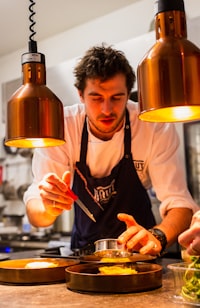
Bernard Pacaud
Grand Chef de Cuisine
Bernard Pacaud has held three Michelin stars continuously since 1986. His culinary philosophy centers on clean presentation, pure flavors, and complete devotion to classic French culinary baselines.

Shared Thoughts (2)
Elena Rostova
September 16, 2026Having dined at Roisie last winter, I can confirm that the wild sea bass with rosemary and caviar sauce was a life-altering experience. The reduction was so silky, it felt like velvet. Reading the science and philosophy behind it makes me appreciate the craft even more. Thank you, Chef!
Julien Mercier
September 15, 2026The dépouillage technique is indeed the difference between a good home sauce and a masterpiece. I have been using vintage copper pots passed down from my grandfather, and there is indeed nothing that compares to the temperature regulation. Magnificent write-up.
Leave a thought